Refusal to Submit to BAC Testing LawyersPhiladelphia
The Fifth Amendment to the U.S. Constitution, part of the Bill of Rights, gives you the right to be free from self-incrimination. The enumerated right is aimed to keep the government from being able to force confessions from people. It extends to DUI tests - you have the right to refuse to take a breath test, urine test, blood test, or field sobriety test. However, the Commonwealth of Pennsylvania has written the law to punish you for exercising that right.
Whether you took a BAC test or exercised your right to refuse, a Philadelphia DUI defense lawyer from Alva & Moscow, LLC can zealously advocate for you. If there's no test, we can argue why the charges should be dismissed. If there was a test, we can show the faults in the test and seek to have the evidence suppressed. We can also represent you in a license suspension hearing and other proceedings that may stem from a BAC test refusal. Call us today at (215) 665-1695 to set up a free consultation.
We represent people on DUI charges throughout the Philadelphia area, including in Delaware County, Bucks County, Chester County, and Montgomery County, as well as in New Jersey.
In Pennsylvania, prosecutors may convict you on Driving Under the Influence if they can prove you were too impaired to safely drive. BAC is the most common method of proving intoxication. It is illegal to drive with a BAC at or above .08.
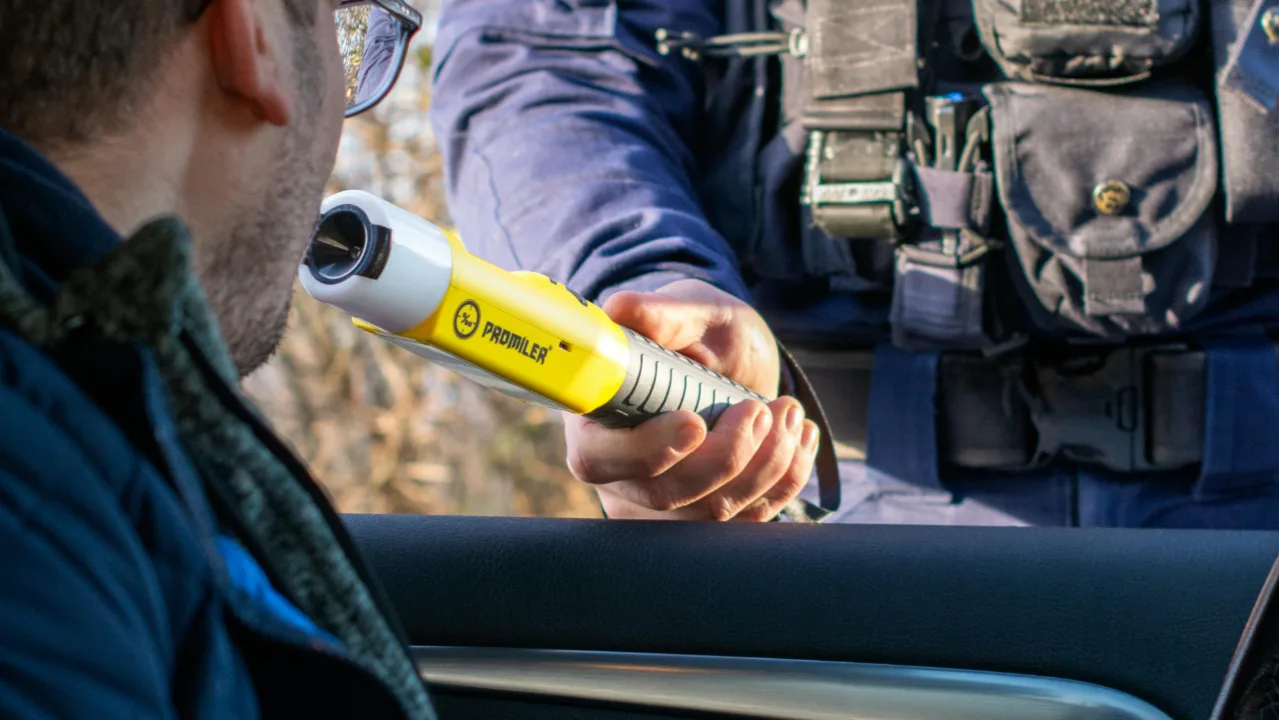
Pennsylvania police carry the Intoxilyzer 5000EN, which tests the breath for alcohol. They may also conduct field sobriety tests, or test your blood or urine. While all of these tests have numerous faults, and an aggressive Philadelphia DUI lawyer can challenge the results, participating in these tests is handing over evidence against yourself in a criminal case, which is always a risk with a jury.
Since you have a Fifth Amendment right to not incriminate yourself, when asked to take any kind of test, you are free to say "No, thank you." In fact, you do not even have to answer questions like "Where have you been?" and "Have you been drinking tonight?" Upon your refusal to participate in a BAC test, though, it is possible for police to obtain a warrant to run a DUI test, which you may not refuse.
If you refuse a test, you are denying critical evidence to the prosecution, and it may be considerably harder to bring charges against you. However, the law makes sure to make you suffer in other ways.
Chiefly, your driver's license is suspended. Pennsylvania law embraces to concept of "implied consent," meaning that by driving on Pennsylvania roads, you have agreed to BAC testing when police have reasonable grounds to request it. License suspension is a civil penalty for not complying with this agreement.
You have 30 days after receiving notice of the suspension to request a hearing. At the hearing, your attorney can question whether police had sufficient reason to pull you over, and reasonable grounds to believe you were intoxicated. Additionally, your attorney can challenge whether the police properly gave you your O'Connell warnings, which are warnings of the consequences of refusing a DUI test.
If the encounter failed to meet any of these criteria, your Philadelphia DUI lawyer can get the suspension overturned.
Fighting for Your Rights in Philadelphia DUI Cases
Whether you submitted to a BAC test or refused, a Philadelphia DUI lawyer from Alva & Moscow, LLC can help you avoid the severe consequences that come from a drunk driving conviction. Our lawyers can call the prosecutor's and police's claims to question whatever your circumstances. Call us today at (215) 665-1695 to schedule a consultation to talk to our attorneys about your DUI matters.
BAC Test Refusal FAQs
What happens if I refused the breathalyzer in Pennsylvania?
Two separate consequences follow. PennDOT suspends your license for 12 months, or 18 months with a prior, as a civil penalty under the Implied Consent law - regardless of what happens in criminal court. In the criminal case, the refusal allows prosecutors to seek highest-tier penalties and to argue the refusal shows consciousness of guilt.
Can I be convicted of DUI without a BAC result?
Yes. The Commonwealth can proceed on the officer's observations, driving behavior, field sobriety tests, and video evidence under the general impairment standard. Refusal cases are often more defensible because the central scientific evidence is missing, but they are not automatic wins, and the refusal itself carries the license consequence.
Can police force a blood draw after a refusal?
Only with a search warrant. After Birchfield v. North Dakota, a warrantless blood draw cannot be justified by implied consent alone, and Pennsylvania cannot impose criminal penalties for refusing a warrantless blood test. Officers in many counties now obtain electronic warrants quickly, and blood drawn under a valid warrant is admissible.
Can I appeal the refusal suspension?
Yes, within 30 days of PennDOT's notice, to the Court of Common Pleas. The appeal contests whether you were actually driving, whether the officer had reasonable grounds, whether you truly refused, and whether the required warnings were properly read. The suspension is stayed while the appeal is pending, so filing quickly preserves your license.
Is refusing the test ever the right choice?
There is no universally right answer, and the decision is made in seconds without counsel. What matters after the fact is that a refusal case has two fronts - the criminal charge and the PennDOT suspension - each with its own deadlines and defenses, and both need attention immediately after the arrest.
Finding The Best
Attorney in PhiladelphiaFor Your Case
If you are facing any kind of injustice, be it a wrongful criminal accusation or being injured by the
negligence of another, a fearless Philadelphia attorney from Alva & Moscow, LLC can fight zealously for
your rights. We can serve as your criminal defense lawyer or your personal injury attorney. We apply our
principles of aggressive representation to seek the best results for you.
We represent clients throughout the Philadelphia area, including Bucks, Chester, Montgomery and Delaware
Counties, as well as Pennsylvania and New Jersey.