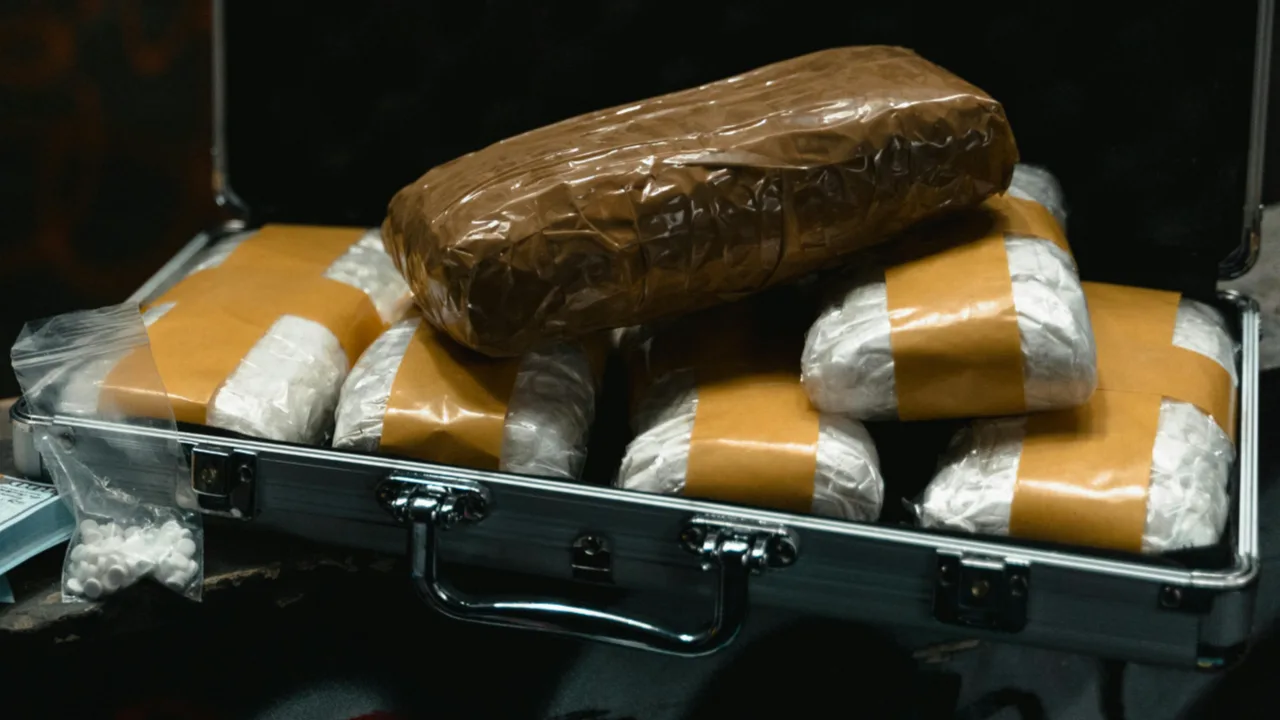
United States Immigration and Customs Enforcement tightly controls everything that comes in and out of the United States. It is illegal to transport certain goods and items across a U.S. border, and other goods and items are strictly regulated. The act of evading ICE or other U.S. officials to transport something into the country is called smuggling or trafficking.
Smuggling charges are tried under federal law. It is important to be represented by an attorney who not only is licensed and experienced in federal courts, but understands the intricacies and defenses in trafficking law.
Philadelphia Smuggling Defense Lawyer
The dedicated legal team at Alva & Moscow, LLC are not only aggressive and zealous advocates, are not only experienced in federal courts and federal procedure, but also have rare experience with smuggling defense. We will put our experience to work for you to build a strong defense that will challenge the evidence prosecutors bring forward. Call us today to schedule a consultation at (215) 665-1695.
We are based in Philadelphia, but are able to represent those facing smuggling charges in Pennsylvania, New Jersey and across the United States.
Pennsylvania Smuggling and Trafficking Information Center
Every item that crosses the border must go through Customs and be inventoried and/or invoiced, whether it is on someone's person, in someone's luggage, on a cargo ship, in a train or on a truck. Everyone must disclose everything they are bringing in. Some items are not allowed into the United States and others require special procedures.
18 U.S. Code § 545 states it is a crime to knowingly and willfully, with the intent to defraud the United States government, secretly bring in any good into the country that should have been declared or inventoried, whether it was by a false invoice or because the item was concealed. The mere possession of any good that came into the United States illegally is sufficient evidence under the law to convict.
The penalty for breaking this law is up to 20 years in federal prison and/or fines, plus forfeiture of the illegal good. Any smuggling conviction is likely to have a dire impacts on a person's immigration status if he or she is not a U.S. citizen.
Many items that could be smuggled are covered by separate treaties or laws, which can carry their own penalties. Smuggling and trafficking cases are tried in federal court under federal law. Smuggling law is largely enforced by U.S. Immigration and Customs Enforcement (ICE), though other federal agencies may also be involved, like the FBI, Homeland Security, or the U.S. Fish and Wildlife Service.
Smuggling Animals and Animal Products Into Pennsylvania
In 1973, the United States signed onto the Convention on International Trade in Endangered Species of Wild Fauna and Flora (CITES), a treaty including most nations in the world that regulates trafficking of animals and plants. The treaty set very strict requirements on exchange of animals that are considered endangered.
Except under very limited circumstances, there may be no sale of any animal threatened with extinction that is caught in the wild. This includes:
Big cats, including tigers, lions, jaguars, leopards and cheetahs;
Many monkeys and apes, including chimpanzees, lemurs and snow macaques;
Rare birds, including some species of parrots and macaws; and
Certain reptiles, such as endangered species of turtles, crocodiles and pythons.
The purpose of transporting the animals does not matter. If the accused is suspected of smuggling a tiger cub to keep as a pet, he or she may face the same penalties as someone smuggling the tiger cub to raise and skin for a rug.
In addition to smuggling the animals themselves, CITES, and therefore the United States, bans trafficking in any animal products derived from endangered animals. One of the most common such products is ivory that is derived from endangered animals, like elephants. Elephant ivory is rare and very valuable, and there are international ivory smuggling rings.
Furs and other products from endangered species, like rhinoceros horn, are also illegal and can land significant fines and jail time, on top of forfeiture of any product determined to be illegal.
At Alva & Moscow, LLC, our defense lawyers in Philadelphia have experience in federal court representing those accused of smuggling ivory, experience we can put to work for you.
Trafficking Guns and Firearms Into Philadelphia
Anyone transporting firearms, ammo and explosives in and out of the United States must have a permit from the U.S. government to do so. Even weapons that are legal in the United States can result in up to 10 years in prison, fines and forfeitures if one is convicted of smuggling them in or out of the country.
Unlike most other smuggling accusations, which have to do with people illegally bringing products into the United States, many firearms smuggling accusations actually involve the suspect exporting weapons from the United States into other countries, like Mexico.
If you are from the country you are accused of smuggling to and not a U.S. citizen, you could face prison time in the United States and then be deported to your home country, where you may also face charges and whatever penalties might await you there. Our attorneys can only represent you in the United States.
Bulk Cash Smuggling
Any time more than $10,000 crosses a U.S. border, whether by mail, courier or in someone's luggage, it must be reported to ICE, whether it is in U.S. currency or some other currency. It is a crime to take more than $10,000 in and out of the country without properly reporting it. This is called "bulk cash smuggling," and it can result in up to five years in prison and forfeiture of the cash to the U.S. government.
Bulk cash smuggling is often done with the intention of money laundering in connection with other criminal organizations. However, the law does not require other criminal connections for a conviction, only the intent to evade a reporting requirement.
Your defense lawyer may be able to show reasonable doubt by showing the possibility that you transported the cash on accident.
Alva & Moscow, LLC | Philadelphia Trafficking Attorney
If you face smuggling charges anywhere in the United States, a Philly smuggling defense lawyer can defend you. You can have an attorney experienced in representing those accused of smuggling or trafficking by contacting Alva & Moscow, LLC. We will fight for your rights. Call us today at (215) 665-1695 to set up a consultation.
Smuggling and Contraband Charge FAQs
What is smuggling charged as in Pennsylvania?
Smuggling is not a single Pennsylvania offense. Depending on what was moved and where, it is charged as contraband to a confined person under 18 Pa.C.S. § 5123, trafficking in a controlled substance under the Drug Act, dealing in unlawful proceeds, cigarette tax offenses, or federal smuggling and importation charges under Title 18 and Title 21 of the U.S. Code.
What are the penalties for bringing contraband into a prison?
Providing contraband to an inmate under 18 Pa.C.S. § 5123 is a second-degree felony when the item is a controlled substance, carrying up to ten years. Providing a weapon or escape implement is also a felony. Even items that seem minor, such as a cell phone, are separately criminalized and are prosecuted aggressively.
When does smuggling become a federal case?
Federal jurisdiction attaches when goods cross an international border or move in interstate commerce, when a federal agency such as Customs and Border Protection, HSI, or the DEA leads the investigation, or when the conduct involves a port, an airport, or the mail. Federal sentences are calculated under the Sentencing Guidelines with no parole.
What are the penalties for importing controlled substances?
Importation under 21 U.S.C. § 952 carries the same mandatory minimum structure as federal trafficking - five years at threshold quantities and ten years at higher weights, with those minimums doubling for defendants with qualifying prior drug felonies. Sentences are driven primarily by drug type and weight.
Can I be charged if I did not know what I was carrying?
Lack of knowledge is a genuine defense, because both state and federal statutes require knowing or intentional conduct. Prosecutors respond with the willful blindness doctrine, arguing that a defendant deliberately avoided learning the truth. Cases turn on payment arrangements, communications, travel patterns, and the plausibility of the cover story.
What happens to property seized in a smuggling case?
Seized vehicles, cash, and goods are typically subject to civil asset forfeiture, a separate proceeding from the criminal case with its own deadlines that run quickly - often 30 to 35 days for a federal administrative claim. Missing the deadline forfeits the property permanently, regardless of how the criminal case turns out.
Should I speak to Customs or federal agents at the airport?
Border agents have broad authority to search travelers and devices without a warrant, and you must provide identification and travel documents. You are not required to answer investigative questions about suspected criminal conduct, and you can state that you want a lawyer. Lying to a federal agent is a separate felony under 18 U.S.C. § 1001.
Finding The Best
Attorney in PhiladelphiaFor Your Case
If you are facing any kind of injustice, be it a wrongful criminal accusation or being injured by the
negligence of another, a fearless Philadelphia attorney from Alva & Moscow, LLC can fight zealously for
your rights. We can serve as your criminal defense lawyer or your personal injury attorney. We apply our
principles of aggressive representation to seek the best results for you.
We represent clients throughout the Philadelphia area, including Bucks, Chester, Montgomery and Delaware
Counties, as well as Pennsylvania and New Jersey.